
Types of chrysalis reveal one of nature’s most awe-inspiring miracles—the quiet, hidden stage where a crawling caterpillar dissolves and re-forms into a winged wonder. Imagine hanging upside down, wrapped in your own skin, thinking “This is it!” only to emerge with vibrant wings, ready to dance on the wind. Hilariously profound, isn’t it? These pupal stages aren’t just biological pauses; they’re sacred cocoons of transformation, mirroring our own spiritual journeys through darkness into light. In this guide, we’ll explore the diverse types of chrysalis, blending science with soul-stirring insights that remind us: even in stillness, magic is brewing.
Whether you’re a backyard butterfly enthusiast spotting a green chrysalis on a leaf or seeking hope amid life’s “pupal” challenges, understanding types of chrysalis offers practical identification tools and deeper meaning. Let’s dive in—your inner butterfly might just flutter with excitement!

What Is a Chrysalis? The Basics of This Transformative Stage
At its core, a chrysalis (or pupa in broader terms) is the third stage in complete metamorphosis for butterflies and moths. After the egg hatches into a voracious caterpillar (larva), it enters this resting phase. But “resting”? Hardly! Inside, the caterpillar essentially liquefies, reorganizing into an adult using “imaginal discs”—pre-programmed cells for wings, eyes, and more.
What is a chrysalis made of? It’s crafted from the caterpillar’s hardened outer skin after its final molt, reinforced with proteins and chitin for protection. No silk involved for butterflies—that’s a moth thing (more on cocoons later). This tough shell shields the miracle within, much like how spiritual retreats or tough times protect our growth.
Spiritually, the chrysalis symbolizes surrender. The caterpillar doesn’t fight the dissolution; it trusts the process. In our lives, those confined, uncertain periods? They’re chrysalises too—preparing us for flight. As one reader shared: “During my divorce, I felt trapped like a pupa. Watching a monarch emerge reminded me: beauty comes from breaking open.” Hopeful, right?
Types of Chrysalis vs. Cocoons: Butterfly Pupae and Moth Differences
Not all pupae are created equal. Here’s the key distinction:
- Butterfly Chrysalis: Naked, obtect pupa—smooth, hard-shelled, often hanging via a silk pad and cremaster (tail hook). Appendages fused to the body.
- Moth Cocoon: Often silk-spun enclosure around the pupa, incorporating leaves or debris for camouflage. Many moths have exarate pupae (free appendages) inside.
What are the different types of pupa? In insects broadly: obtect (fused, like butterflies), exarate (free-moving), and coarctate (in larval skin, like flies). For Lepidoptera, butterflies favor sleek chrysalises; moths go cozy with cocoons.
Humor alert: Butterflies are the minimalists—”Just me and my shiny shell!” Moths? Overachievers spinning entire blankets. Yet both emerge transformed, teaching us that paths to rebirth vary—no one way is “better.”

Iconic Types of Chrysalis in Butterflies
Let’s spotlight popular types of chrysalis, starting with crowd favorites.
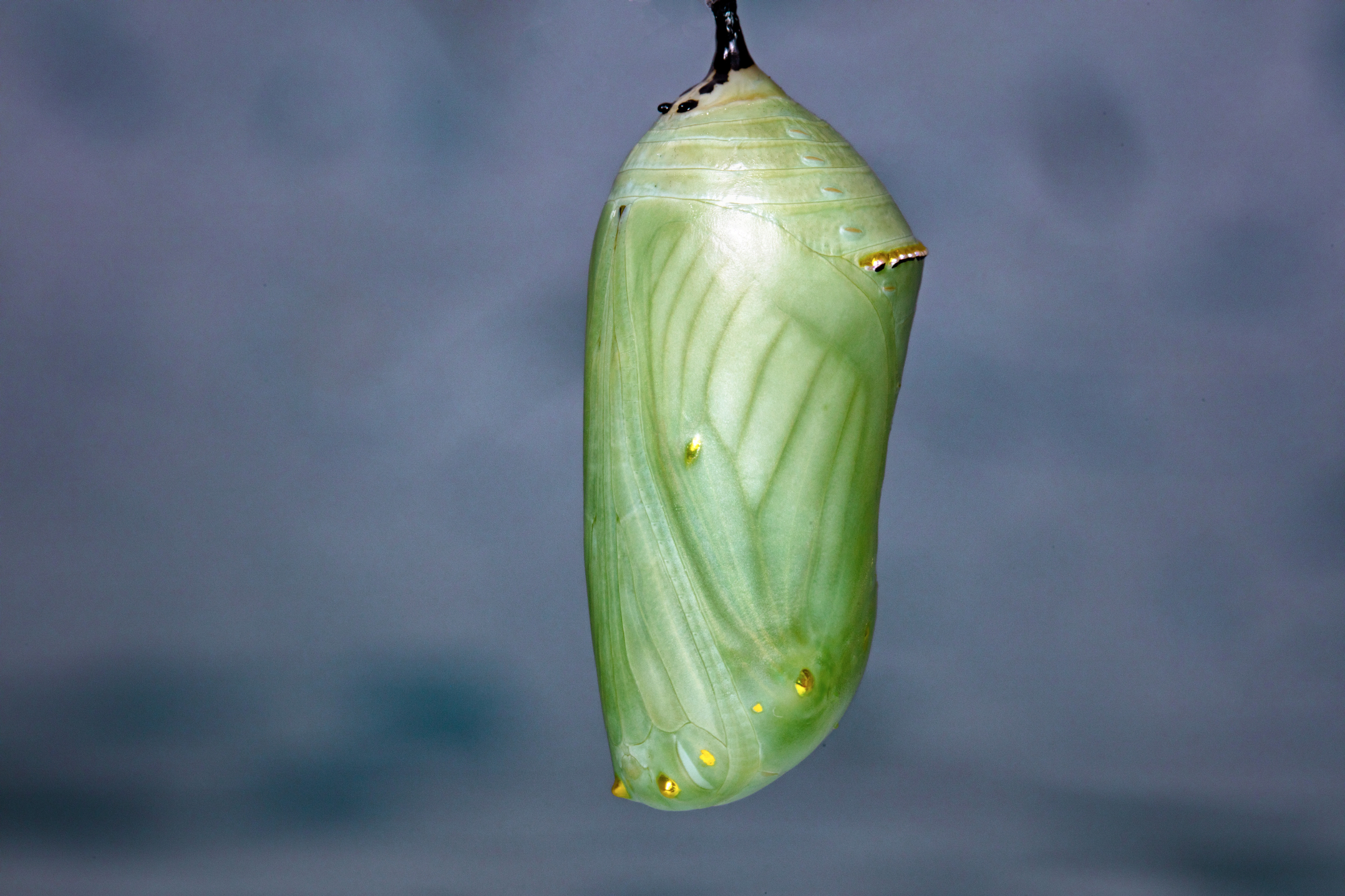
Monarch Butterfly Chrysalis: The Jade Gem with Gold Accents
The monarch butterfly chrysalis is a showstopper—vibrant jade green with a band of shimmering gold dots and black lines. It hangs like a pendant, taking 8-15 days to eclose (emerge).
Why this color? Camouflage among leaves, plus those gold flecks might mimic dew drops. Fun fact: The gold is from carotenoids, pigments from milkweed.
Spiritually? It’s pure alchemy—turning “poisonous” caterpillar into migratory marvel. Testimonial: “After losing my job, I raised monarchs. That gold-dotted chrysalis gave me hope: even in ‘toxic’ times, treasure forms.” Learn more about monarchs at Monarch Watch.

Black Swallowtail Chrysalis: Master of Disguise
Black swallowtail chrysalises come in two morphs: green (summer, blending with foliage) or brown (overwintering, mimicking twigs). Girdled with silk for support.
Why are chrysalis different colors? Environment triggers it—shorter days or cooler temps cue brown for camouflage. Genius adaptation!
Imagine thinking you’re done, then poof—spicebush swallowtail-like beauty. One enthusiast shared: “Finding a brown one in winter felt like discovering hidden strength in my depression. Emergence brought tears of joy.”

Queen Butterfly Chrysalis: Monarch’s Subtle Cousin
Similar to monarch but smaller, often pale green or pinkish with gold. Less flashy, more understated elegance.
Queens host on milkweed too, overlapping ranges. Identification tip: Fewer gold dots, smoother lines.
Painted Lady Chrysalis: Mottled and Mysterious
Mottled gray-brown, textured like withered leaves—ultimate camouflage. Spiky edges deter predators.
These migratory marvels form quickly, emerging in 7-10 days. Spiritual nudge: Blending in during transformation? Sometimes hiding is holy protection.
Peacock Butterfly Chrysalis: Angular and Enigmatic
Angular, spiky, in gray, brown, or green. Looks like a crumpled leaf or thorn—brilliant disguise!
A European favorite, it overwinters as an adult but pupates dramatically.

Moth Pupal Stages: Cocoons and Hidden Chrysalises
Moths often spin cocoons, but some have naked pupae.
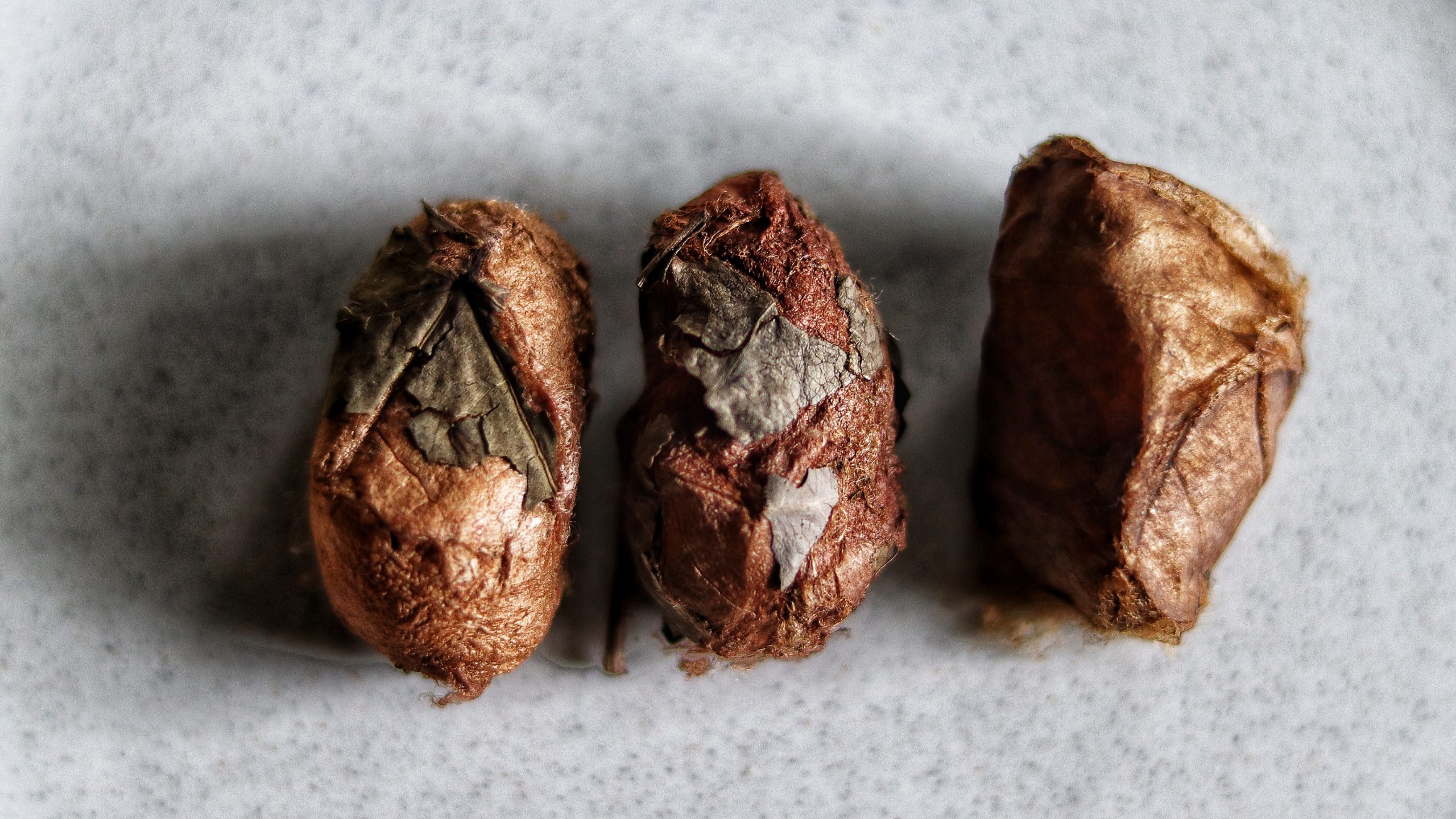
Luna Moth Cocoon: Silken Leaf Wrap
Brown, papery silk incorporating leaves—falls to the ground for overwintering.
Emerging lime-green beauty? Ethereal. Symbolizes lunar cycles of death and rebirth.
Other moths: Polyphemus (dense silk), some buried pupae.
For moth chrysalis identification, look for silk vs. bare.

Why Are Chrysalis Different Colors? Camouflage and Beyond
Primary reason: Survival. Green blends with leaves, brown with bark, and gold shines like water. Genetics and environment decide photoperiod, and temperature influences.
Spiritually? Colors reflect seasons of the soul. Green for growth, brown for rest, gold for divine spark. No “wrong” color—just perfect adaptation.
Chrysalis Identification Chart and Tips
Use these visuals:

Green chrysalis identification: Often swallowtails or monarchs.
Brown chrysalis identification: Overwintering swallowtails or camouflaged ladies.
Types of chrysalis with pictures: hang location, shape, and attachments key.
The Spiritual Hope in Types of Chrysalis
Here’s the heart: Metamorphosis screams hope. The caterpillar doesn’t know wings await—it trusts. In our unanswered questions—”Why this struggle?”—the chrysalis answers: For flight.
Humorously, if caterpillars had therapy: “Doc, I’m dissolving!” Therapist: “Excellent progress!”
Testimonial from Alex: “Cancer felt like an eternal pupa. A painted lady emerging on my windowsill? Reminder: I’m becoming something beautiful.”
Another: “Raising lunas aligned with my sobriety. The cocoon’s darkness birthed light—hope renewed.”
Just as lunar phases guide tides, personal cycles shape us. To uncover your spiritual transformation blueprint, explore a personalized Moon Reading. It might illuminate hidden wings!
Frequently Asked Questions
What type of chrysalis?
Depends on species—butterfly (hard shell) or moth (often cocooned).
What are the different types of pupa?
Obtect (butterflies), exarate (many moths), coarctate (flies).
Why are chrysalis different colors?
Camouflage against predators, triggered by the environment.
What is a chrysalis made of?
Hardened larval skin (exoskeleton) with chitin.
